Before the Crate Opens: A Remote Inspection Protocol for the Digital-First Collector
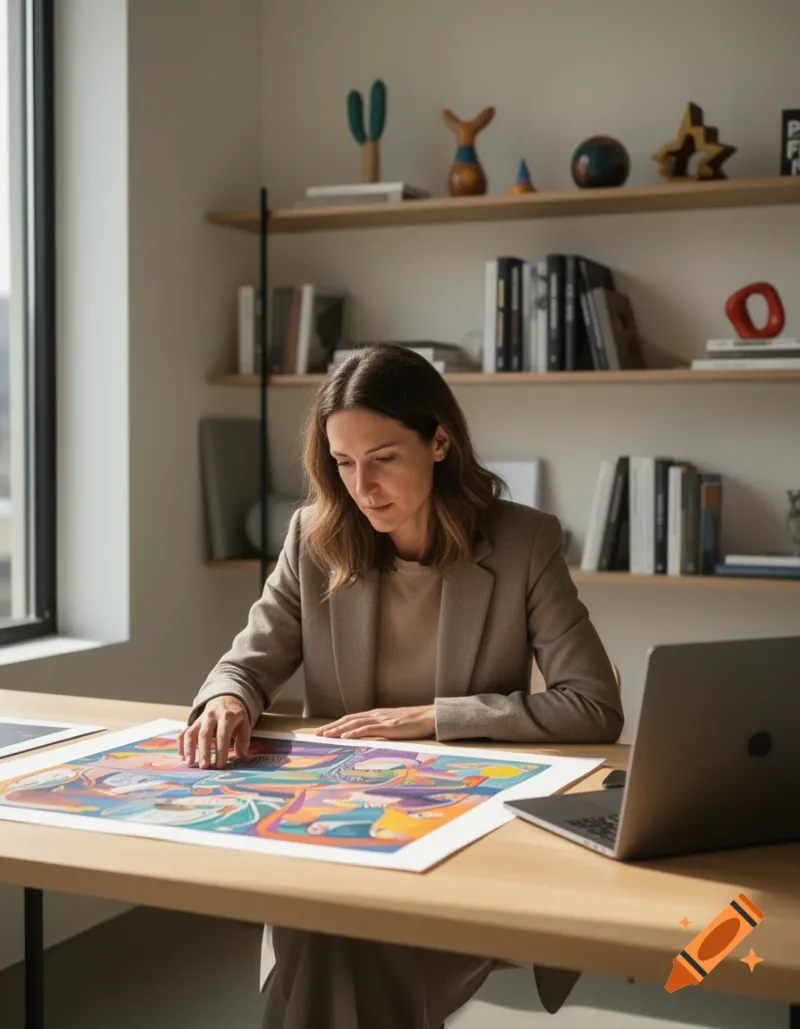
Photo: person examining fine art painting on laptop screen high resolution art collection, via media.craiyon.com
The American art market has quietly completed a migration. What was once an emergency adaptation — buying sight unseen during pandemic-era lockdowns — has become standard practice, with a meaningful share of six- and seven-figure transactions now initiated, negotiated, and closed entirely online. Yet the due diligence habits of many collectors remain rooted in the physical era: fly in, visit the gallery, squint at the canvas under raking light, and decide.
That model still has value. But for collectors operating across time zones and state lines, the question is no longer whether remote vetting is possible. It is whether it is done rigorously.
Start With the Image, Not the Listing
Every serious remote evaluation begins with imagery — and the first test is whether the seller can produce it. A reputable dealer or auction house should provide high-resolution files captured under calibrated, color-neutral lighting, including full-frame views and detailed crops of corners, edges, signatures, and any area of suspected restoration.
Request the raw files rather than compressed versions. Over-aggressive JPEG compression can smooth craquelure, mute varnish inconsistencies, and erase the subtle tonal shifts that hint at overpainting. If a seller hesitates to share unwatermarked, full-resolution images with a serious buyer, treat that hesitation as data.
Then interrogate the images systematically:
- Examine the edges and tacking margins. Later additions, strip linings, and dimension alterations tend to reveal themselves at the perimeter first.
- Look for repetition of pattern. Identical craquelure across unrelated passages of the composition can indicate a transfer or a print substrate.
- Compare color across multiple images. Inconsistencies between the hero shot and detail shots sometimes expose digital retouching of condition issues.
Demand a Condition Report With a Name Attached
A condition report is only as credible as the person who wrote it. Ask who prepared it, what their qualifications are, and whether they were retained by the seller or work independently. A report authored by the consignor's own conservator carries different weight than one commissioned from an independent accredited conservator — ideally a member of the American Institute for Conservation.
The report itself should be specific. "In good condition" is a conclusion, not an observation. You want to read about stretcher condition, lining history, varnish layers, inpainting mapped to specific coordinates, and any structural intervention. Vague language is not necessarily deceptive, but it should always prompt a follow-up question in writing.
Use the Live Video Walkthrough Deliberately
A scheduled video inspection — the seller walking the room with a phone or, better, a trained assistant holding the camera while a specialist narrates — is the closest remote substitute for standing in front of the work. Treat it as a structured examination, not a tour.
Ask the holder to:
- Move a raking light across the surface at a low angle to reveal planar distortion, canvas weave anomalies, and impasto consistent with the artist's known technique.
- Turn the work to show the verso, frame, and stretcher in continuous motion rather than static frames that can be staged.
- Photograph the work next to a color reference card and a ruler for scale.
- Answer spontaneous requests. A seller genuinely confident in the object will accommodate an unscripted request to zoom in on the lower left corner. Evasion, repeated across multiple questions, is its own form of information.
Record the session with permission. Memory is a poor due diligence tool, and a recording gives your own advisor something to review.
Reconcile the Digital File With the Paper File
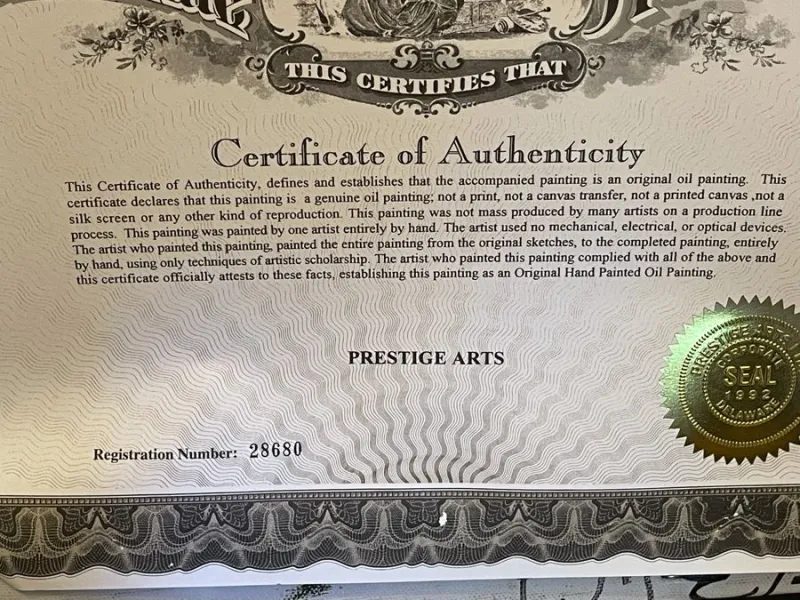
Imaging and documentation should corroborate each other. If the condition report describes a 2016 lining, the verso shown on video should show evidence of it. If the provenance file references an exhibition in 1998, ask whether installation photographs or the exhibition catalogue exist and whether the work is identifiable in them. Every cross-reference that checks out strengthens the file; every one that cannot be verified narrows the questions you still need answered.
Know When Remote Is Not Enough
A disciplined remote protocol can carry a buyer far — often all the way to a conditional purchase agreement. But there are thresholds at which physical inspection or an independent, in-person examination by your own expert is non-negotiable: works above a price point you define in advance, attributions resting on connoisseurship rather than catalogues raisonnés, and any file with a contested or incomplete history.
The best American collectors no longer choose between digital and physical diligence. They layer them — using the remote protocol to decide which works justify the flight, and arriving with questions the screen already taught them to ask. That is not a compromise. That is what modern connoisseurship looks like.