Calendar, Not Crisis: The 2026 Annual Provenance Review for Private Collections
Private collections rarely fail because an owner ignores provenance. They fail because the file ages unevenly. An invoice is filed but not scanned; a loan agreement is signed but not calendared; an appraisal is commissioned but never reconciled with the insurance schedule. By the time a sale, claim, or inheritance requires a clean record, the collector is reconstructing history under pressure.
A 2026 annual provenance review is not a bureaucratic exercise. It is a risk-management routine. The goal is to know, object by object, what is documented, what is missing, what is stale, and what must be updated before a third party asks. The calendar below is designed for private collections in the United States and can be scaled from a dozen works to several hundred.
Begin With the Inventory, Not the File
Before reviewing paperwork, reconcile the physical collection with the inventory. Confirm artist, title, date, medium, dimensions, edition or unique status, accession number, and current location. Photograph each work in place, including the frame, stretcher, verso, signature, and any labels. A provenance file is only as reliable as the inventory it describes; if the inventory is wrong, every downstream document inherits the error.
Quarter One: Insurance and Valuation
January is the right time to compare the insurance schedule against the inventory. Confirm that every work is scheduled, that values reflect the most recent appraisal, and that riders cover transit, loans, and off-site storage. An appraisal older than three to five years deserves review, particularly for artists whose markets have moved. Update replacement-cost figures and retain the appraiser’s methodology, not just the final number. If a work has been conserved, reframed, or reattributed, note the change and inform the insurer in writing.
Quarter Two: Loans, Exhibitions, and Agreements
Spring is the season for loan hygiene. Pull every active and expired loan agreement. Confirm borrower identity, exhibition dates, insurance limits, condition-report obligations, credit lines, and return receipts. File facility reports and installation photographs with the object record. If a museum loan is pending, verify that the lender of record matches the legal owner. Expired agreements should be marked inactive but retained; they are part of the exhibition history and may support future provenance narratives.
Quarter Three: Dealer Correspondence and Transaction Records
Summer is for the commercial paper trail. Organize invoices, bills of sale, provenance statements, wire confirmations, and dealer correspondence by object. Do not alter originals. Where a chain of ownership is thin, write a short internal memo describing the gap rather than inventing continuity. Email can be evidence, but it must be preserved in a way that shows sender, recipient, date, and context. Export important threads to PDF and store them with the transaction record.
Quarter Four: Estate, Tax, and Succession Documents
Autumn is for the documents that outlive the collector. Review trusts, wills, beneficiary designations, and any charitable-donation plans. Confirm that titled ownership matches the estate plan. For donations, retain qualified appraisals and the supporting documentation required for IRS Form 8283. If works are held in an entity, verify that the entity’s records identify the art and the chain of custody. Estate planning is not provenance, but it often determines who will be responsible for proving provenance later.
The Digitization Protocol
Digitize with discipline. Scan at 300 to 600 dpi, save as PDF/A where appropriate, and use a naming convention that includes artist surname, title, year, and document type. Add metadata for date, author, recipient, and transaction. Keep one master file and one working copy. Back up locally and in the cloud, with access controls for family members, advisors, and authorized staff. A scan is not a substitute for the original; it is an access copy that reduces handling and speeds review.
Red Flags of a Stale File
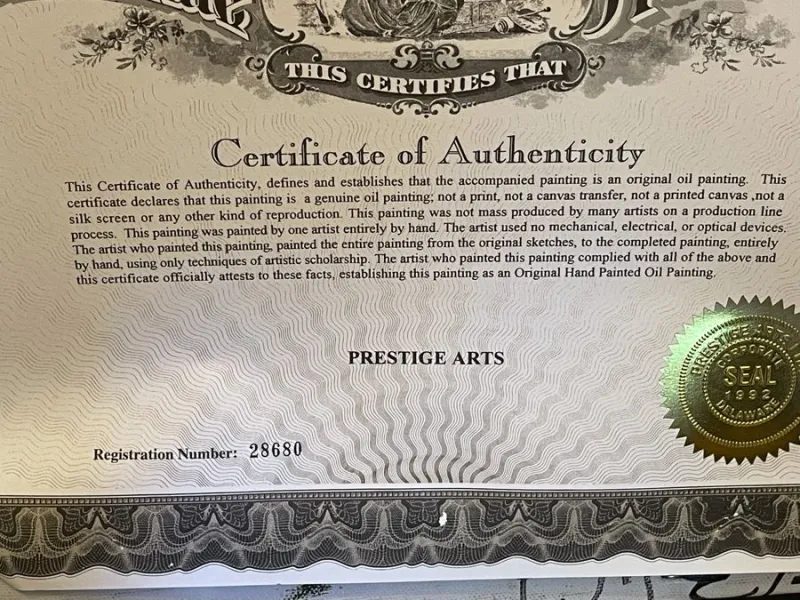
Watch for undated photographs, unnamed sellers, photocopies of photocopies, inconsistent spellings of artist or owner names, unsigned certificates, missing shipping records, expired loan agreements, and appraisals that no longer match insurance values. A file that cannot answer who owned the work, when it changed hands, and how it traveled is not necessarily fraudulent, but it is vulnerable.
Before Sale, Claim, or Inheritance
When a trigger event approaches, pull the complete file rather than the folder labeled provenance. Reconcile the inventory, order a current appraisal if value is material, and have counsel review any gaps that could affect title, tax, or disclosure. The best time to discover a missing record is months before anyone asks for it. The twelve-month review exists so that the answer is already in the file.
At Provenance Art Gallery, the standard is not a perfect paper trail. It is a documented, intelligible one. A calendar-driven review keeps the record honest, current, and ready for the next chapter.