Studio Secrets and Family Archives: How Artists' Estates Are Rewriting Authentication History
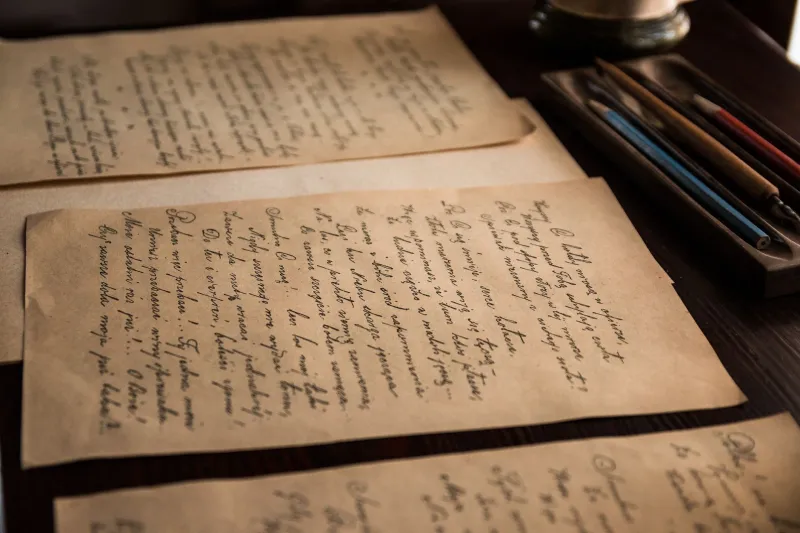
Tucked inside storage units, attic boxes, and climate-controlled archive rooms across the country, the private records of artists' families are quietly transforming how disputed and overlooked works are authenticated. From handwritten correspondence to studio inventory ledgers, these intimate documents are proving to be among the most powerful tools available to authentication scholars—and they are reshaping both art historical narratives and collector portfolios in the process.
The Archive as Authentication Instrument
Formal authentication has long relied on a familiar set of instruments: technical analysis of materials, stylistic comparison with documented works, and the paper trail of exhibition catalogues and sales records. These tools remain indispensable. Yet they carry a structural limitation that estate archives do not: they can only speak to what was publicly recorded.
Artists, particularly those working in the mid-twentieth century, often operated with minimal regard for the documentation that would later matter enormously to collectors and scholars. Works left studios without receipts. Gifts to friends and family members went unrecorded. Paintings stored in secondary spaces were never photographed. The public record, in many such cases, is simply silent—and silence, in the absence of other evidence, has historically been treated as a red flag.
Estate archives break that silence. Personal correspondence between an artist and a gallerist might reference a specific work by description, dimension, or informal title. Studio visitor logs, where they survive, can place a work in the artist's possession at a documented date. Photographs taken by family members during studio visits—images never intended for scholarly use—sometimes capture works on easels or walls, providing visual documentation that no catalogue raisonné contains.
"The archive doesn't replace technical analysis," notes one estate administrator working with the legacy of a significant postwar American painter. "But it fills in the human story around the object. It tells you where the work was, who saw it, what the artist thought of it. That context is irreplaceable."
The Detective Work of Estate Research
Connecting scattered documentation to specific works is rarely straightforward. Estate research at its most demanding resembles investigative journalism more than art history: it requires cross-referencing sources that were never intended to be cross-referenced, following leads that dissolve into dead ends, and maintaining rigorous skepticism about conclusions that seem almost too convenient.
Consider a representative scenario that authentication scholars encounter with some regularity. A work surfaces in a private collection, attributed to a recognized American artist but absent from all published literature. Technical analysis confirms period-appropriate materials and is consistent with the artist's known practice. Stylistic review is supportive but not definitive. The case is promising but incomplete.
The estate archive, in such instances, becomes the decisive resource. Researchers begin with correspondence files, scanning for references to works given as gifts, sold informally, or loaned to individuals outside gallery channels. They examine financial records where available, looking for transactions that might correspond to the work's dimensions, subject matter, or informal title. They review family photographs systematically, sometimes frame by frame, searching for a glimpse of a canvas that matches the work in question.
When the pieces connect—when a letter dated 1962 describes giving a painting of a particular subject to a named individual, and that individual's descendants are the current holders of the work in question—the evidentiary value is substantial. Not conclusive in isolation, but substantial, and often sufficient to tip a borderline case into confident attribution.
Estates as Institutional Actors
The role of artists' estates in authentication has evolved considerably over the past two decades. Estates that once operated primarily as licensing and copyright entities have increasingly positioned themselves as authentication resources, investing in the organization and digitization of archive materials and engaging directly with scholars and collectors seeking documentation.
This evolution is not without complexity. Estates have legitimate interests in controlling attribution, and those interests do not always align perfectly with the interests of collectors seeking verification. Some estates have faced criticism for authentication decisions perceived as commercially motivated or insufficiently transparent. Others have been praised for establishing rigorous, independent review processes that enhance rather than compromise the integrity of their artists' markets.
The most effective estate authentication programs share certain characteristics. They maintain clear separation between archival research and commercial decision-making. They engage external scholars with demonstrated expertise and no financial stake in the outcome. They document their reasoning thoroughly, making the basis for authentication decisions accessible to subsequent reviewers. And they treat the archive as a living resource—one that continues to grow as family members contribute additional materials and as digitization projects surface documents previously overlooked.
Reshaping Art Historical Narratives
The authentication discoveries emerging from estate archives carry consequences that extend well beyond individual collector portfolios. In several notable cases in recent years, estate research has established the existence of significant bodies of work that were previously unknown to scholarship—works that alter the understanding of an artist's development, output, and thematic concerns.
A sculptor whose known catalogue comprised primarily large-scale public commissions was recently found, through estate correspondence and studio photographs, to have maintained an active practice of intimate, small-scale works throughout his career. These pieces, given primarily to family members and close friends, had never been exhibited or published. Their authentication, grounded in the estate archive, has prompted a reassessment of the artist's practice that is now making its way into academic literature and exhibition programming.
For collectors, discoveries of this kind present both opportunity and responsibility. Works authenticated through estate research and previously absent from the market may offer acquisition possibilities that established catalogue works do not. They also require particularly careful due diligence: the same archival rigor that supports authentication must be applied to confirming that the work's ownership history is clean, that no competing claims exist, and that the estate's authentication process meets contemporary standards.
A Foundation for Future Collecting
The growing importance of estate archives in authentication reflects a broader maturation of the art market's evidentiary standards. The days when informal attribution and dealer reputation sufficed for major acquisitions are receding; today's sophisticated collectors expect documentation that can withstand scrutiny from multiple angles.
Estate archives, properly organized and made accessible, represent precisely the kind of primary documentation that meets this standard. They are irreplaceable precisely because they are intimate—because they capture the daily reality of artistic practice in a way that no subsequent scholarship can fully reconstruct. For collectors committed to building holdings with genuine, durable provenance, the estate archive is not a secondary resource. It is, increasingly, the first place serious authentication research begins.