Inherited Collections, Evolving Standards: What Heirs Must Understand About Yesterday's Provenance Documentation

For a growing number of American families, inheriting a significant art collection brings not only financial complexity but a quiet authentication crisis. Documentation that satisfied the standards of a previous generation—dealer receipts, informal appraisals, family correspondence—often falls measurably short of what today's market and legal environment require. Navigating this gap demands both strategic thinking and a clear-eyed assessment of what re-authentication actually costs, and what it is worth.
The Standards Have Moved
It is worth stating plainly what many heirs discover only after the fact: the authentication and provenance standards governing the art market in 2024 bear little resemblance to those that prevailed in 1994, and even less to those of 1974. A collection assembled over decades by a discerning parent or grandparent may be entirely genuine, aesthetically significant, and financially valuable—and still carry documentation that creates real complications in today's environment.
The shifts have been driven by several converging forces. The exposure of high-profile forgery networks in the 1990s and 2000s sharpened institutional awareness of how easily paper trails could be fabricated, prompting auction houses, dealers, and insurers to demand more rigorous supporting documentation. The passage of the Holocaust Expropriated Art Recovery Act in 2016 imposed new research obligations on works that changed hands in Europe between 1933 and 1945, regardless of how many subsequent owners had held them in good faith. And the proliferation of technical analysis tools—multispectral imaging, X-ray fluorescence, isotopic pigment analysis—has created a new evidentiary layer that previous generations of collectors neither possessed nor were expected to provide.
The result is a landscape in which a collection documented to the standards of its acquisition era may require substantial additional work before it can be sold, donated, insured at full value, or transferred cleanly to the next generation.
What Yesterday's Documentation Typically Looks Like
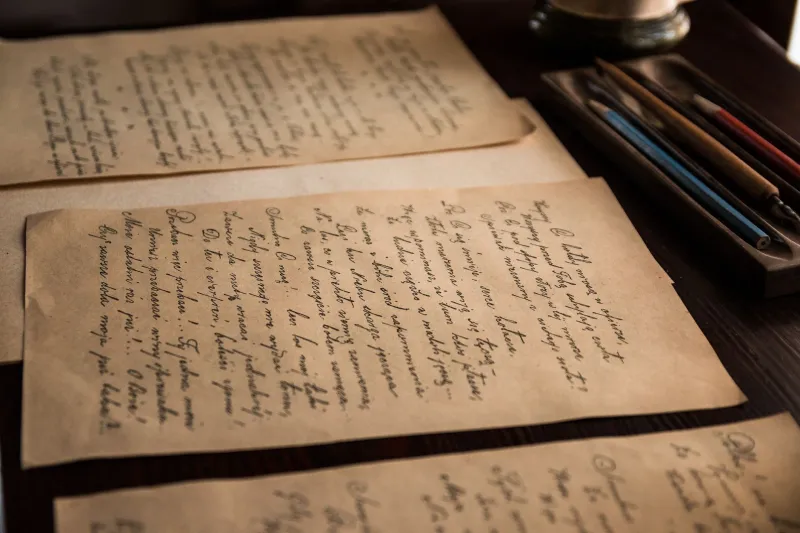
Collectors who built significant holdings between the 1960s and early 1990s generally operated in an environment where the primary authentication instruments were dealer reputation, exhibition history, and the judgment of recognized connoisseurs. A receipt from a respected New York or Chicago gallery, a note of attribution from a prominent curator, or inclusion in a dealer's private records was often considered sufficient. In many cases, it was.
The problem is not that this documentation was fraudulent or careless—in most instances, it was neither. The problem is that it was designed for a different evidentiary environment. It does not address the questions that today's buyers, institutions, and legal authorities are trained to ask. It does not speak to the work's history prior to the gallery acquisition. It does not include technical analysis. It does not demonstrate that the work was cross-checked against databases of stolen or looted art—databases that, in many cases, did not exist when the purchase was made.
For heirs, this documentation gap can surface at precisely the wrong moment: during estate settlement, when a potential buyer requests a full provenance report, or when an institution declines a gift because the accompanying documentation does not meet its acquisition standards.
The Re-Authentication Decision
The question of whether to pursue re-authentication is rarely simple, and the answer varies considerably depending on the work, the intended disposition, and the nature of the existing documentation.
For works of significant value—pieces that might reasonably sell for six figures or more—re-authentication is almost always worth serious consideration. The cost of a thorough provenance review, which may include technical analysis, archival research, and consultation with relevant catalogue raisonné authorities, typically ranges from several thousand to tens of thousands of dollars depending on complexity. Against a potential sale or insurance value in the six figures, that investment is straightforward to justify. The documentation produced also has compounding value: it travels with the work permanently, benefiting not only the current heir but every subsequent owner.
For works of more modest value, the calculus is harder. If a painting is likely to realize $15,000 at auction, spending $8,000 on authentication research may not be economically rational—particularly if the existing documentation, while incomplete by contemporary standards, is unlikely to raise genuine legal or ethical concerns. In such cases, heirs may reasonably choose to sell with full disclosure of the documentation's limitations, accepting that the market will price in the uncertainty.
The most difficult cases are those involving works with potential restitution implications. Any work that was in European private or institutional hands during the Nazi era—regardless of how many good-faith American owners have held it since—requires a specific category of provenance research that goes beyond standard authentication. The HEAR Act and the resources of organizations such as the Commission for Looted Art in Europe have made this research more accessible, but it remains time-consuming and sometimes inconclusive. Heirs who discover gaps in a work's pre-war ownership history should treat those gaps as a serious obligation, not merely a market inconvenience.
Building a Re-Authentication Strategy
For heirs managing collections of any significant scale, a structured approach to documentation review is far preferable to addressing issues reactively as they arise. The starting point is a systematic inventory: cataloguing every work in the collection, compiling all existing documentation, and identifying works where that documentation is materially incomplete by contemporary standards.
From that inventory, priorities can be established. Works intended for near-term sale or donation should be addressed first. Works with any European ownership history prior to 1945 require dedicated research regardless of other factors. Works where informal attribution—rather than formal authentication—is the primary basis for the ascribed artist should be flagged for review, since informal attribution rarely satisfies today's market standards and can create complications at resale.
Engaging a qualified art advisor or provenance researcher at this stage is advisable. The field has professionalized considerably, and specialists with experience in estate documentation review can identify both the risks and the opportunities within an inherited collection far more efficiently than a general attorney or financial advisor. The investment in that expertise typically pays for itself in avoided complications.
An Honest Assessment of What This Moment Requires
There is a temptation, when confronting the gap between inherited documentation and contemporary standards, to view the situation as an indictment of the previous generation's collecting practices. That framing is neither accurate nor useful. Collectors who built serious holdings under the standards of their era were, in the vast majority of cases, acting in good faith and with appropriate diligence.
The standards have simply evolved—reflecting hard lessons learned from market failures, legal developments, and a broader cultural reckoning with the provenance of objects that passed through periods of historical violence. Heirs who engage seriously with re-authentication are not correcting their predecessors' mistakes. They are fulfilling an obligation that the current moment places on anyone who holds authenticated art: the obligation to understand what they own, document it honestly, and pass it forward with the clarity that serious collecting demands.
That is, ultimately, what provenance means. Not a fixed record from the past, but a living responsibility in the present.