Hidden Hands, Obscured Records: What the Rise of Private and Sealed-Bid Art Sales Means for Collector Due Diligence
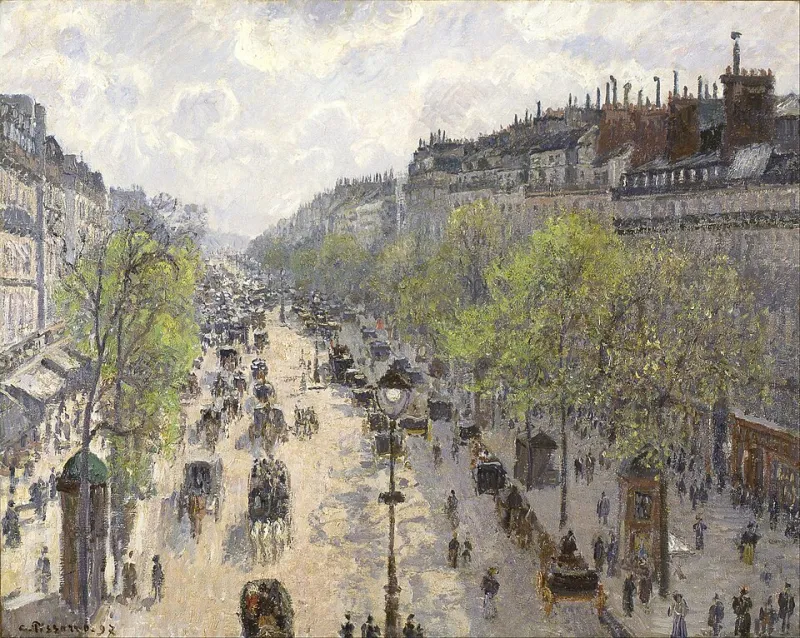
Photo: Camille Pissarro, Public domain, via Wikimedia Commons
There is a particular kind of discomfort that settles over a seasoned collector when a work arrives with an impeccable aesthetic pedigree but a conspicuously thin paper trail. The painting may be visually arresting, the attribution may carry scholarly weight, and the asking price may reflect genuine market confidence. Yet somewhere in the ownership chain, a name has been replaced by a phrase—"private European collection" or "anonymous vendor"—and the documentation simply stops.
This is no longer an anomaly. It is, increasingly, a feature of the contemporary art market. The deliberate obscuring of seller identity through sealed-bid processes, private treaty sales, and intermediary-managed transactions has become a structural element of how significant works move between hands. For collectors committed to verified provenance, this trend demands careful scrutiny.
Why Sellers Are Choosing Anonymity
The motivations behind anonymous sales are not uniformly suspicious. In many cases, they are entirely understandable. Estates seeking to liquidate collections without attracting public attention, collectors navigating contentious divorces, and family trusts managing inherited assets may all have legitimate reasons to avoid the visibility that major auction houses provide. High-profile sales attract media coverage, and media coverage can complicate personal circumstances in ways that have nothing to do with the artwork itself.
There are also financial incentives at play. Sellers who bypass the major public auction rooms—Christie's, Sotheby's, Phillips—avoid buyer's premiums and consignment fees that can substantially erode net proceeds. Private dealer networks and sealed-bid platforms have positioned themselves as efficient alternatives, promising discretion alongside competitive valuations.
In the United States specifically, a growing secondary market infrastructure has developed around this demand. Boutique advisory firms, family office art consultants, and online platforms operating with limited public disclosure have all expanded their footprints over the past decade. The result is a significant volume of art transacting entirely outside the public record.
The Authentication Problem at the Heart of Private Sales
Public auction records serve a function that goes far beyond price transparency. When a work appears in a documented sale—catalogued, lotted, and publicly attributed—that record becomes an anchor point in its provenance chain. Future buyers can trace the work to a specific moment in time, verify the attribution that was presented, and cross-reference against scholarly databases, stolen art registries, and export documentation.
Private and sealed-bid transactions strip away these anchors. When a work changes hands through a confidential channel, no public record is generated. The next buyer receives a work whose most recent ownership is described in deliberately vague terms, and the documentation gap may span years or even decades.
This creates a compounding problem. The further a work travels through anonymous channels, the more attenuated its provenance becomes. Each undocumented transfer adds another layer of ambiguity that subsequent authentication efforts must penetrate—or acknowledge as unresolvable.
Forensic analysis can establish material facts about a work's age and composition. Scholarly attribution can situate it within an artist's documented output. But neither science nor connoisseurship can reconstruct an ownership history that was never recorded in the first place.
Red Flags That Serious Buyers Cannot Afford to Ignore
Not all anonymous sales are problematic, but certain patterns should prompt heightened scrutiny. Collectors operating in this environment should treat the following as material concerns requiring independent investigation before any purchase proceeds.
Provenance language that substitutes geography for identity. Phrases such as "acquired from a private collection in the Southwest" or "property of a New York estate" are not provenance—they are placeholders. Legitimate sellers with legitimate histories can generally provide more specific documentation when pressed, even if they prefer not to disclose names publicly. The inability or unwillingness to provide any specifics beyond regional descriptors warrants careful attention.
Rushed timelines and pressure tactics. Sealed-bid processes often carry artificial urgency, with buyers given narrow windows to conduct due diligence before submission deadlines. A compressed timeline that makes thorough provenance research logistically difficult is not a coincidence—it is a condition that benefits anyone seeking to limit scrutiny. Serious collectors should treat deadline pressure as a reason to slow down, not accelerate.
Documentation that begins suspiciously recently. A work presented as significant—carrying a substantial price tag and a confident attribution—but supported only by documentation generated within the past five to ten years deserves careful examination. Authentic works with genuine histories tend to leave records: exhibition catalogues, insurance appraisals, estate inventories, dealer correspondence. A thin recent paper trail attached to an ostensibly important work raises the question of what preceded it.
Intermediaries who cannot identify the ultimate seller. In some private sale structures, the buyer is deliberately insulated from the seller by multiple layers of representation. While this architecture can serve legitimate privacy purposes, it also creates conditions in which due diligence is effectively impossible. A collector who cannot determine who is selling a work cannot adequately investigate whether that work was acquired legitimately.
What Responsible Practice Looks Like
The collector who encounters a private or sealed-bid sale is not without recourse. The disciplines of due diligence that apply to any significant acquisition apply here with greater force.
Engaging an independent authentication specialist—one with no financial relationship to the transaction—is a baseline requirement. So is a search of the Art Loss Register and comparable databases, which catalog works known to have been stolen, looted, or otherwise compromised. Export documentation should be requested and reviewed for any work with a non-American ownership history, particularly one that includes European or South American provenance.
Legal counsel experienced in art transactions can also help structure purchase agreements that provide recourse in the event that undisclosed encumbrances surface after closing. Representations and warranties regarding clear title are not standard in all private sale agreements, and buyers who do not insist on them may find themselves without remedy if problems emerge.
Perhaps most importantly, collectors should resist the framing that anonymity is simply a feature of the contemporary market to be accepted without question. The art market's historical tolerance for opacity has created conditions that benefit bad actors alongside legitimate privacy-seekers. Demanding documentation is not an expression of distrust—it is an expression of the standards that protect the long-term integrity of any serious collection.
The Broader Stakes for the Market
The authenticated provenance that underpins genuine value in the art market is not self-sustaining. It depends on a culture of documentation—on sellers who record what they know, institutions that publish what they hold, and buyers who insist on what they are owed before transferring funds.
When significant portions of the market migrate toward deliberate opacity, that culture erodes. Works that might otherwise be identified as problematic slip through without scrutiny. Price benchmarks become distorted when comparable sales are never publicly recorded. And the collector who purchases in good faith today may find, years later, that the undocumented gap in their work's history has become a material liability.
Authenticated art carries its history openly. That transparency is not incidental to its value—it is foundational to it. In a market increasingly comfortable with hidden hands, insisting on legible records remains the most reliable form of collector protection available.