Recovering the Record: The Scholars Quietly Rebuilding the Canon of American Women Artists
Photo: Archives New Zealand from New Zealand, CC BY 2.0, via Wikimedia Commons
For much of American art history, the record simply stopped. Women who trained, exhibited, and sold alongside their male contemporaries were, over decades, dropped from catalogues, misattributed to better-known names, or filed away as 'school of' or 'attributed to' — designations that quietly drained both their reputations and their market value.
That record is now being rebuilt. And the tools being used are the same ones that underpin the entire authenticated art market: archival research, scholarly committees, and the patient compilation of catalogues raisonnés.
The Archive as Engine of Recovery
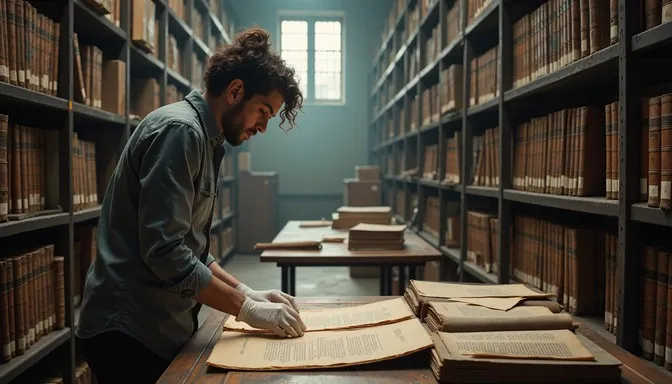
The reattribution of works by historic women artists rarely begins in the auction room. It begins in letters, exhibition checklists, gallery ledgers, and studio inventories. A painting signed only with initials, long assigned to a male peer, is traced through a 19th-century exhibition record to an artist whose career was documented in a family archive that survived.
This is slow, unglamorous work, and it is precisely why it commands authority. When a scholarly committee or an artist's foundation confirms an attribution, it does so on the strength of documentation — exhibition history, stylistic analysis, technical examination — that can withstand scrutiny. That is what separates a verified legacy from an appealing story.
Foundations and the Weight of the Catalogue Raisonné
The catalogue raisonné remains the gold standard of authentication in the art world, and a growing number are devoted to American women artists long denied one. Institutions and estate foundations have taken up the work: compiling every known example, documenting provenance for each entry, and, critically, ruling on works whose attribution is contested.
For collectors, these projects carry real consequences. A work included in a completed catalogue raisonné enters the market with a form of verification that no single expert opinion can match. A work excluded — or rejected — can see its prospects fundamentally altered. The stakes explain why foundations approach their rulings with such care, and why the process can take years.
What Reattribution Does to Value
The market effect of verified reattribution is well documented. Works sold for decades as 'attributed to' a woman artist, priced accordingly, can command multiples of that figure once the attribution is confirmed and published. Collectors who acquired such works on faith — often against prevailing market skepticism — have been vindicated in both scholarly and financial terms.
But the opportunity comes with a caution. Buying ahead of scholarly consensus is speculation, not collecting. The responsible approach is to acquire works whose attribution is documented, transparent, and under active study — not to gamble on a signature that may never be confirmed.
The Scholarly Responsibility Behind the Opportunity
It would be a mistake to read this movement purely through the lens of price. The researchers, curators, and foundation boards driving it are motivated first by historical accuracy: the conviction that the American canon is incomplete, and that correcting it is a duty owed to the artists themselves.
That sense of responsibility is, in fact, good for collectors. Authentication efforts conducted for reasons of scholarship rather than commerce tend to be the most rigorous. A foundation that hesitates, investigates thoroughly, and occasionally declines to confirm a tempting attribution is a foundation whose confirmations are worth trusting.
Collecting the Corrected Canon
For American collectors, the rise of authenticated works by historic women artists represents something rarer than a trend: a structural correction in the market, backed by documentation rather than fashion. The works entering the market with verified provenance and scholarly support today are the ones that will anchor serious collections tomorrow.
Provenance, in the end, is about restoring the full story of an artwork — who made it, who kept it, and why it mattered. The ongoing recovery of women artists is one of the most consequential chapters of that restoration now underway, and collectors paying attention are witnessing the record being written in real time.